
2026 Technology Transformation Guide: Rebuilding Business Through Agentic AI, 5G IoT and Next-Generation Security
Explore how Agentic AI, 5G IoT, AI-RAN and Zero Trust are reshaping enterprise technology, security and operating models in 2026.
Introduction: 2026 — A Turning Point for True Digitalization
For the business world, 2026 represents more than a change in the calendar. It marks a transition from the “static” phase of digital transformation to an “autonomous” one. Efforts previously focused on data collection and visualization are now giving way to an ecosystem in which data generates autonomous decisions. Success in this period will be measured not only by access to technology, but by the ability to manage Agentic AI systems capable of independently handling complex workflows, 5G IoT infrastructure and Zero Trust security as a unified model.
1. From Generative AI to Agentic AI: An Evolutionary Leap
In 2024 and 2025, artificial intelligence was largely discussed through the lens of Generative AI. However, 2026 projections indicate that this technology is moving beyond a tool that waits for user prompts and evolving into Agentic AI, capable of determining its own strategy.
1.1. Differences in Definition and Operation
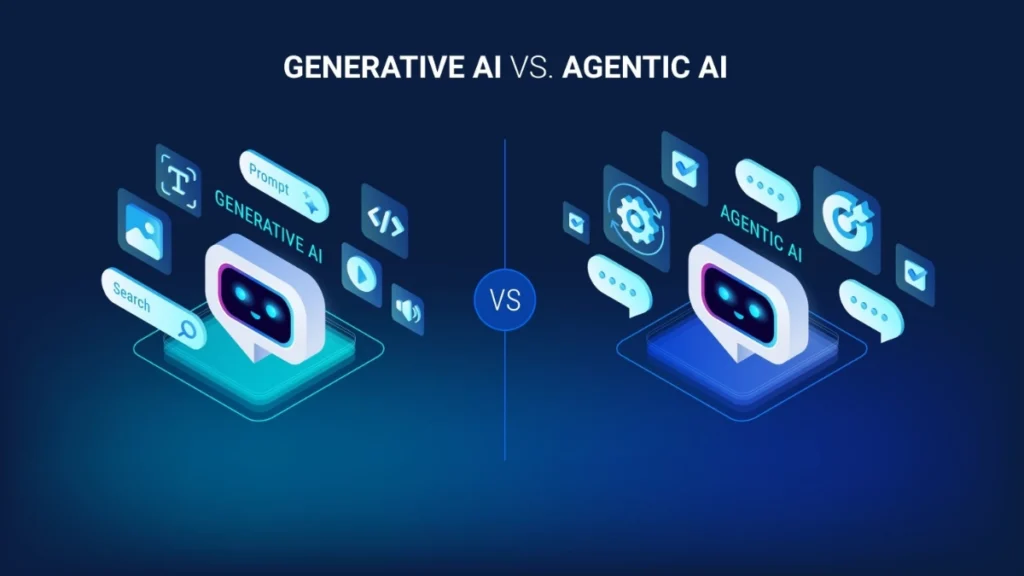
Generative AI is generally based on a question-and-answer mechanism and focuses on producing static content. By contrast, Agentic AI is an autonomous system capable of managing complex workflows independently from end to end.
- Action-Oriented Operation: While a GenAI model can summarize a financial report, an Agentic AI system can identify missing data, retrieve it from relevant sources, perform risk analysis and initiate the approval process.
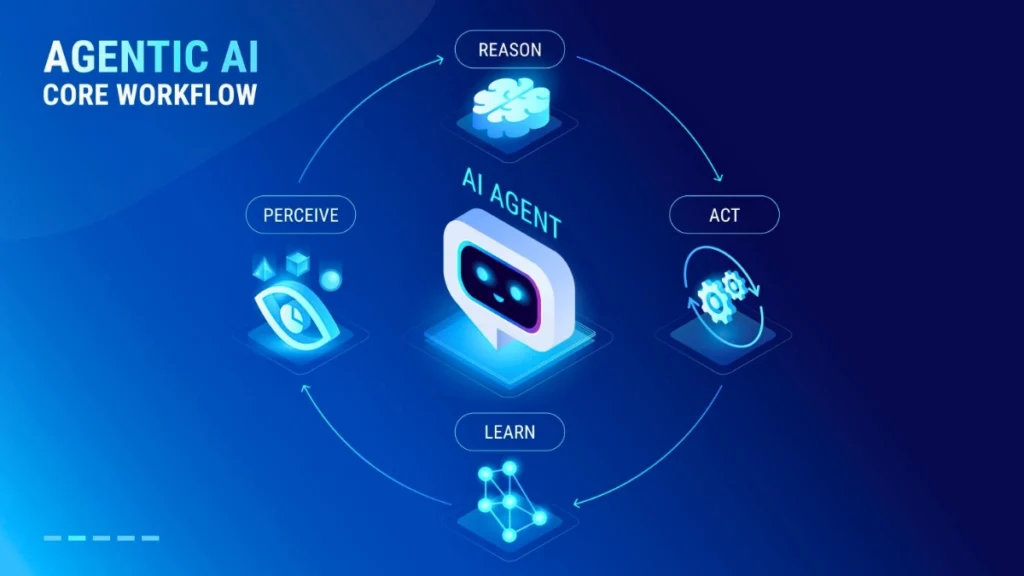
- Independent Planning: Agents can independently plan the required steps toward a given objective and complete the process using tools such as APIs, software and databases.
1.2. A New Standard for Operational Efficiency
McKinsey research highlights that multi-agent squads, in which several agents work together, can deliver productivity improvements of between 40% and 80% per business case across enterprise processes. This allows employees to move away from manual and repetitive work and focus on strategic decision points.
2. The Transformation of Telecommunications: From Infrastructure to Intelligence
In 2026, telecommunications is evolving beyond networks that simply carry data and toward an AI-as-a-Service (AIaaS) model.
2.1. AIaaS and Enterprise Solutions
According to STL Partners reports, approximately 38% of operators’ AI initiatives are focused on B2B opportunities. Rather than building their own AI infrastructure, enterprises increasingly prefer to use high-performance AI Factories offered by operators.
- Sovereign AI: For highly regulated sectors, keeping data local and processing it within national borders has become critical. Sovereign AI infrastructures operating in local data centers form a key part of the security-focused technology approach of 2026.
2.2. The AI-RAN Ecosystem
Optimizing Radio Access Networks (RAN) with AI not only supports energy efficiency, but also dynamically manages network capacity according to real-time demand. This is essential for latency-sensitive applications such as autonomous vehicles and industrial robotics.
3. 5G IoT: Large-Scale Growth and Economic Impact
Market reports published as of January 2026 confirm the continued rise of the 5G IoT ecosystem.
3.1. 70% Growth and a $285 Billion Market
According to DataM Intelligence projections, the global 5G IoT market is expected to reach $285 billion between 2024 and 2031, with a significant compound annual growth rate of 69.4%.
- Industry Leadership: Industrial IoT, smart cities and healthcare are positioned as the key drivers of this growth.
- Number of Connections: Licensed cellular IoT connections are expected to reach 5.8 billion by 2030.
3.2. Managing Deployment Complexity
Managing billions of devices in the field requires technical expertise. Technologies such as Thales Adaptive Connect enable remote over-the-air activation of devices after they leave the factory. This approach simplifies complex logistics processes and allows enterprises to operate globally with a single stock keeping unit (SKU).
The Foundation of Security: Zero Trust Architecture
The widespread adoption of AI and IoT has also significantly expanded the attack surface. In 2026, security is no longer based solely on perimeter defense, but on a Zero Trust approach that continuously verifies every transaction.
4.1. “Never Trust, Always Verify”
The Zero Trust model argues that no user, device or system inside or outside the network should be trusted by default.
- Continuous Verification: Access permissions are revalidated for every transaction.
- Least-Privilege Access: Users or autonomous agents are granted only the minimum access required to complete their current task.
- Micro-Segmentation: Networks are divided into smaller secure segments to prevent a potential breach from spreading across the entire environment.
4.2. Agentic Identity
In the future, not only people but also AI agents will need to be verified. This requires defining and auditing the authority boundaries of these agents in line with Zero Trust principles.

5. Organizational Strategy: T-Shaped Teams and the Role of Generalists
Technological transformation can succeed not only through software and hardware, but also through the effective organization of human resources.
5.1. Who Is a Generalist?
In the T-shaped competency model, generalists represent the horizontal bar of the letter “T.” They have foundational knowledge across multiple disciplines, such as data literacy, business strategy, security and customer experience, and can connect these areas.
- Cross-Disciplinary Coordination: They turn the technical output of deep specialists, such as data scientists and MLOps engineers, into business outcomes.
- Flexibility: They help maintain API-driven and agile structures by preventing complex systems from becoming overly rigid.
5.2. The Team Structure of the Future
Building teams with a small number of deep technical specialists and a larger number of broad-vision generalists is one of the most practical ways for enterprises to adapt to the dynamic environment of 2026. This model combines technical depth with operational flexibility.

Conclusion: A Strategic Roadmap
Gaining a competitive advantage in 2026 will require more than simply using technology. It will depend on building an architecture capable of managing it autonomously and securely. When the decision-making power of Agentic AI, the broad connectivity capacity of 5G IoT and the resilience of Zero Trust come together, enterprises can move beyond operational rigidity and become genuinely agile.
The future will belong not to those who merely monitor data, but to visionary leaders who can transform it into an autonomous workforce.
Build Your Enterprise Technology Roadmap
Let’s evaluate your Agentic AI, 5G IoT, security and enterprise infrastructure needs together in line with your business objectives.
Kaynaklar
McKinsey & Company — The Future Is Agentic: AI’s Role in the End-to-End Corporate Credit Process
STL Partners — Enterprise AI: Practical Steps for Telcos to Address Customer Needs
DataM Intelligence — Global 5G IoT Market to Brush 70% CAGR
Thales — Simplifying IoT Deployments with Thales Adaptive Connect
STL Partners — The Rise of AI-as-a-Service: Top 3 Enterprise Use Cases by Telcos
STL / Red Hat / Nokia — The AI-RAN Ecosystem Playbook: Collaborating for Scale and ROI